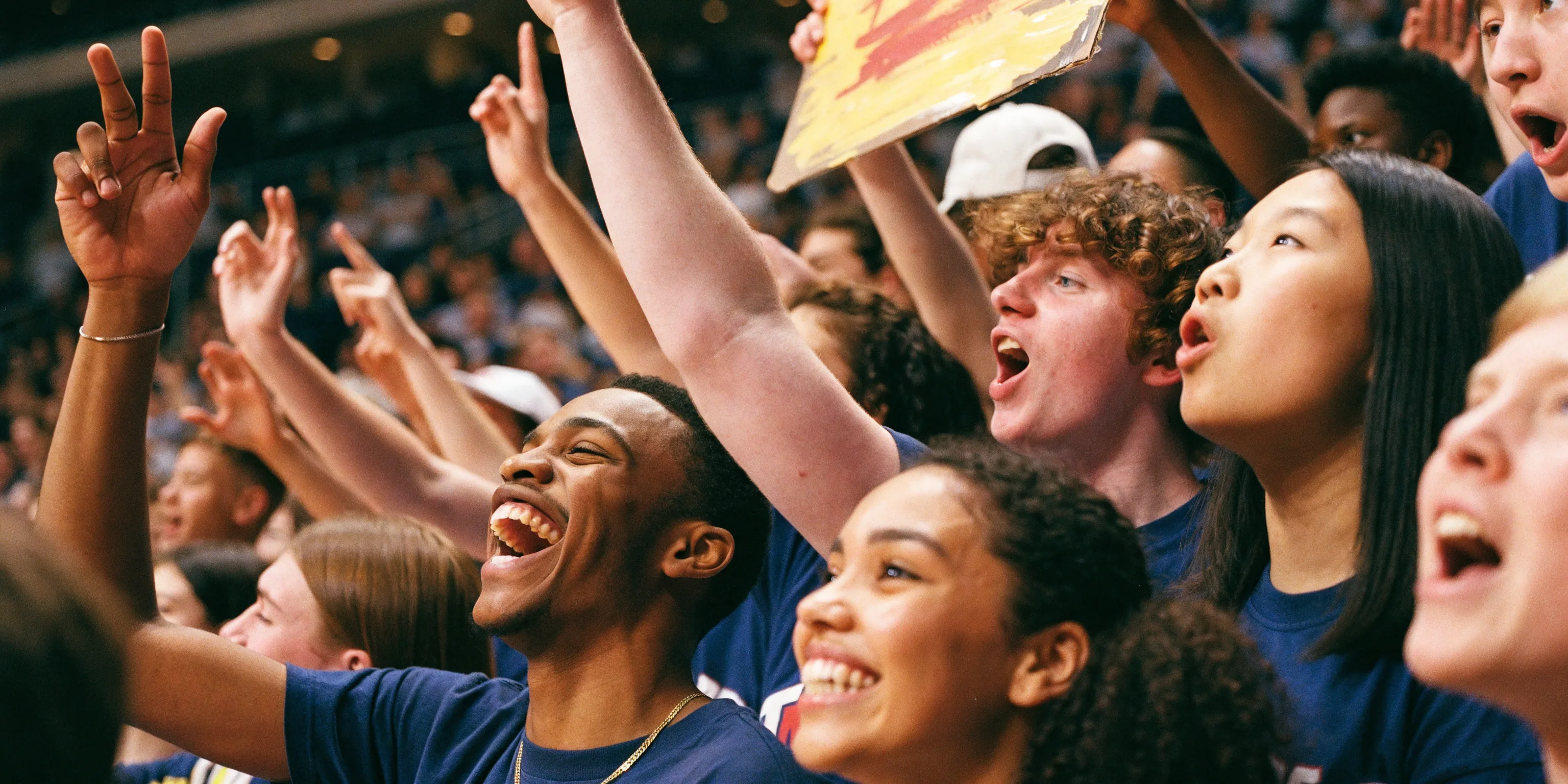
The New York Knicks won the championship in San Antonio tonight, their first since 1973, and Jalen Brunson walked off with the Bill Russell trophy after a unanimous Finals MVP vote. He scored 45 in the closer and tied Michael Jordan for the most points anyone has put up in a Finals clincher on the road. That's the highlight. It isn't the story.
The story happened in June 2024, in a meeting room, with no cameras.
The discount
That summer Brunson signed a four-year, $156.5 million extension. Had he waited twelve months and reached free agency, he could have signed for five years and $269 million. The headline everyone repeated was the gap: $113 million left on the table. Stars in their prime do not do that.
The honest version is more interesting. Because of how the deal was structured, with a player option in the final year, the real near-term sacrifice was closer to $37 million, and Brunson is set up to recoup most of the rest through a supermax in 2028 or 2029. So this wasn't a vow of poverty. It was a bet. He traded a maximum he couldn't reach for another year against cap space his team could use right away, and he wagered the team would spend it well and that he'd get paid later. He has said plainly that he sacrificed for the team. He has also said he made sure his family was taken care of. Both are true. That's the part people miss: it was shrewd, not selfless.
What the space bought, and what it won
A pay cut is only as good as what the front office does with the room. Brunson handed New York flexibility, and New York spent it. They traded for Mikal Bridges, his old Villanova teammate, reuniting a core of college champions in Brunson, Josh Hart and Bridges. They brought in Karl-Anthony Towns. They kept OG Anunoby. None of that happens cleanly if Brunson is eating the full max.
The rest of the season was almost too tidy. The Knicks won the NBA Cup in December, swept Cleveland in the Conference Finals, and beat Victor Wembanyama's Spurs in five, clawing back from double-digit holes in every win, including a 29-point comeback in Game 4 that stands as the largest in Finals history. The guy who took less gave a city that had waited 53 years everything.
Why this changes the conversation
For two decades the superstar playbook had one dominant move. Get the maximum, and if your roster isn't good enough, force your way somewhere it is. The player-empowerment era was mostly about stars joining talent someone else had assembled. Brunson ran it backward. He took a discount and stayed to help build the thing, rather than shop for a finished version of it. And it produced the ultimate result.
That proof point matters, because the old objection to taking less was reputational as much as financial. Take the discount and lose, and you look naive. Now the move has a champion's name on it. The risk just dropped for everyone who comes after.
What sports business should take from this
The more I sit with the result, the less it reads as a story about players at all. The most valuable thing Brunson built wasn't a roster spot or a cap number. It was himself, as an asset.
He became the rarest thing a club can own, a beloved face the whole market wants to buy into. Anyone who has spent time in fan engagement knows the difference between attention you rent and equity you build. A hired superstar gives you spikes. A homegrown hero who took less and won after a 53-year wait gives you a bond, and bonds are what sell season tickets and hold pricing power year after year. Finals tickets were reportedly trading for tens of thousands of dollars. Some of that is scarcity. Most of it is what a city pays for a team it has decided to love.
The superteam era was, in marketing terms, a decade of renting star power. It moved League Pass numbers but quietly weakened the thing clubs actually monetize over time, which is the franchise's identity as an institution. A star always one summer from leaving can't anchor a market. Brunson anchored one. And the narratives that compound value aren't bought, they're built, and they only pay off when the organization is sharp enough to see one forming and amplify it. Brunson supplied the story. The Knicks still had to build the roster that let it finish and read the moment well enough to sell it.
The question Wembanyama now faces
Which puts the league's most interesting question on the losing bench.
Victor Wembanyama just finished a season that bordered on absurd. Unanimous Defensive Player of the Year, the first unanimous winner the award has ever had and the youngest ever at 22, leading the league in blocks for a third straight year while going for 25 and 11 a night in his first career playoff run. By the textbook, a player like that doesn't take a discount and shouldn't have to. You don't ask the best player alive to subsidize the role players. You build around him.
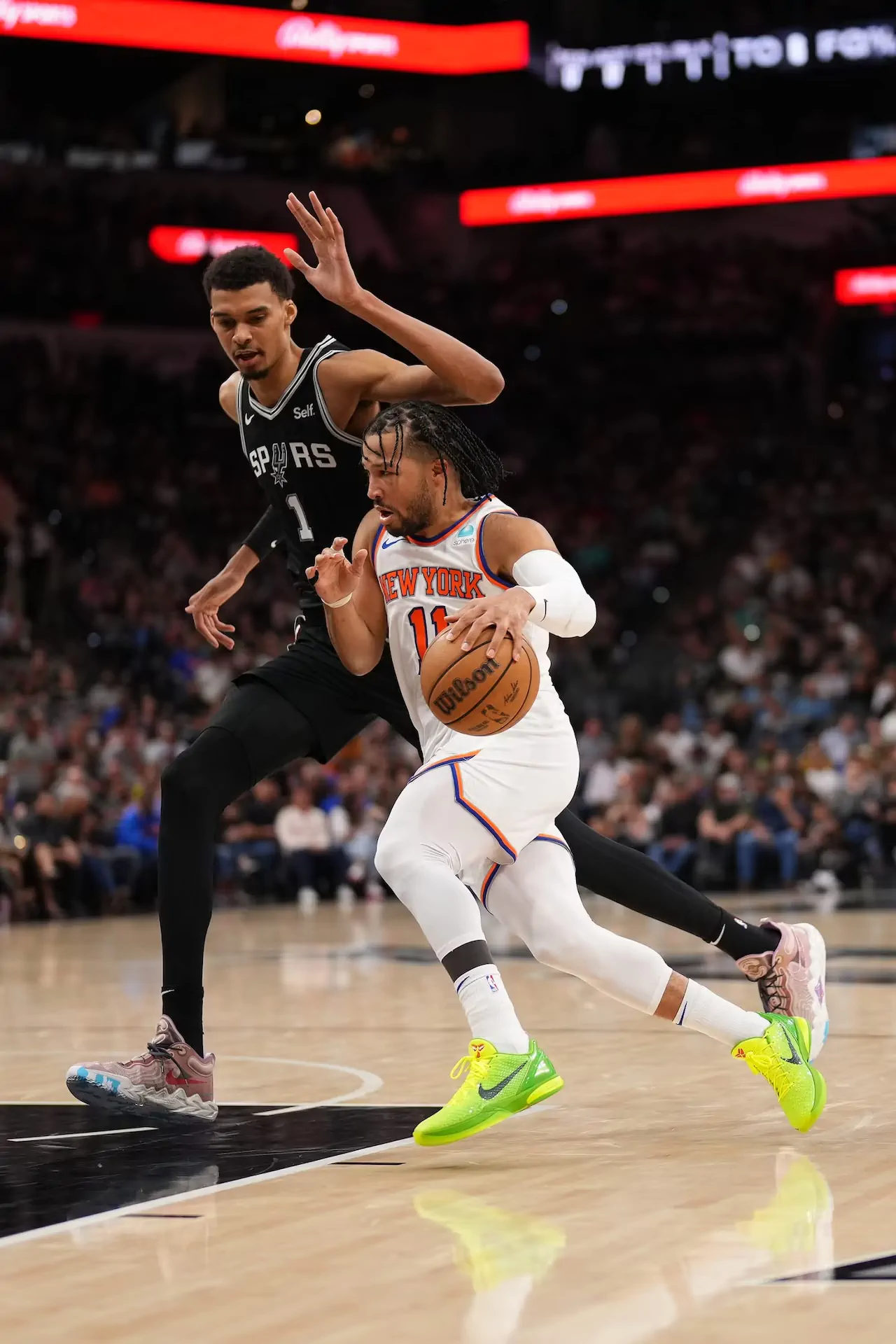
Except he just watched the textbook lose. The man who beat him took less on purpose. He built the team that did it and walked off with the ring and the Finals MVP that Wembanyama wanted.
And the question isn't rhetorical, because San Antonio's cheap young core has a clock on it. Wembanyama is on roughly $13 million this season, theft for a player dropping 40-point playoff games. The day after the Finals he becomes eligible for an extension that starts near $251 million and climbs past $300 million, kicking in for 2027-28. De'Aaron Fox is already locked into a $229 million max. Stephon Castle and Dylan Harper, the young pieces who actually scared the Knicks, both have paydays coming. You cannot pay all four near the max and stay near the second apron. By 2028, somebody good has to go, unless somebody bends.
The Spurs, of all teams, know what bending looks like. Duncan, Parker and Ginobili held a core together for fifteen years because Duncan in particular took discount after discount to keep the band whole. Leaving money on the table was the real San Antonio tradition, more than the bank shots. The catch is who carries it now. That tradition was Popovich's, and Popovich is no longer on the bench. After a stroke in 2024 he moved upstairs to run basketball operations at 77, with Mitch Johnson coaching. The first real test of whether the old ethos survived came back the wrong way: offered the choice, Fox took the full $229 million, as any modern player would. The culture that would make a Wembanyama sacrifice feel natural may be the very thing San Antonio lost when Pop left the sideline.
So Wembanyama has a genuinely hard call. Take the supermax he has earned, the way Fox did and the way the rules say he should, and trust the front office to solve the math. Or do the thing he just lost to, leave real money on the table while he's young, and bet that a built-from-within core gives him what a maxed-out one might price out of reach. One path is safe and rational. The other just won the championship.
The man who showed him the way is the one who took it from him. Now we find out what Wembanyama learned.