College sports has a strange problem: the product has never been bigger, and the student sections have rarely looked emptier. TV money is up, playoff formats are expanding, athletes are marketable in ways the NCAA spent decades preventing — and yet athletic departments across every division spend their falls staring at bleachers that used to fill themselves. Student attendance has been sliding for over a decade, and "students just don't show up anymore" has become the most repeated sentence in college athletics marketing.
Card on the table before we go further: we build Game Set Engage, a fan engagement platform that works with athletic programs, so we have obvious skin in this game. But most of this article is about initiatives that have nothing to do with us — because the best answer to "what should we do about fan engagement?" is almost never "buy software first." It's "understand why the good initiatives worked, then decide what to copy."
So here's the field guide: the NCAA fan engagement initiatives worth stealing, the patterns behind them, and how to run the playbook on a budget that doesn't have a TV network attached.
The initiatives worth stealing
1. The Iowa Wave — engagement as ritual
At the end of the first quarter of every Iowa home football game, 70,000 people turn away from the field and wave at the children's hospital overlooking Kinnick Stadium, where patients and families watch from the upper floors. It started in 2017 from a fan's Facebook suggestion. It costs nothing. It has become one of the most famous traditions in American sports.
Why it works: it gives every person in the stadium a moment that is about being there. You cannot do the Wave from your couch. The best fan engagement initiatives create things that only exist in person — which is exactly what you're competing for when every game is also on a screen.
Steal this: you don't need a hospital next door. You need one repeatable moment, at the same point of every game, that belongs to the people in the building.
2. The Penn State White Out — scarcity and identity
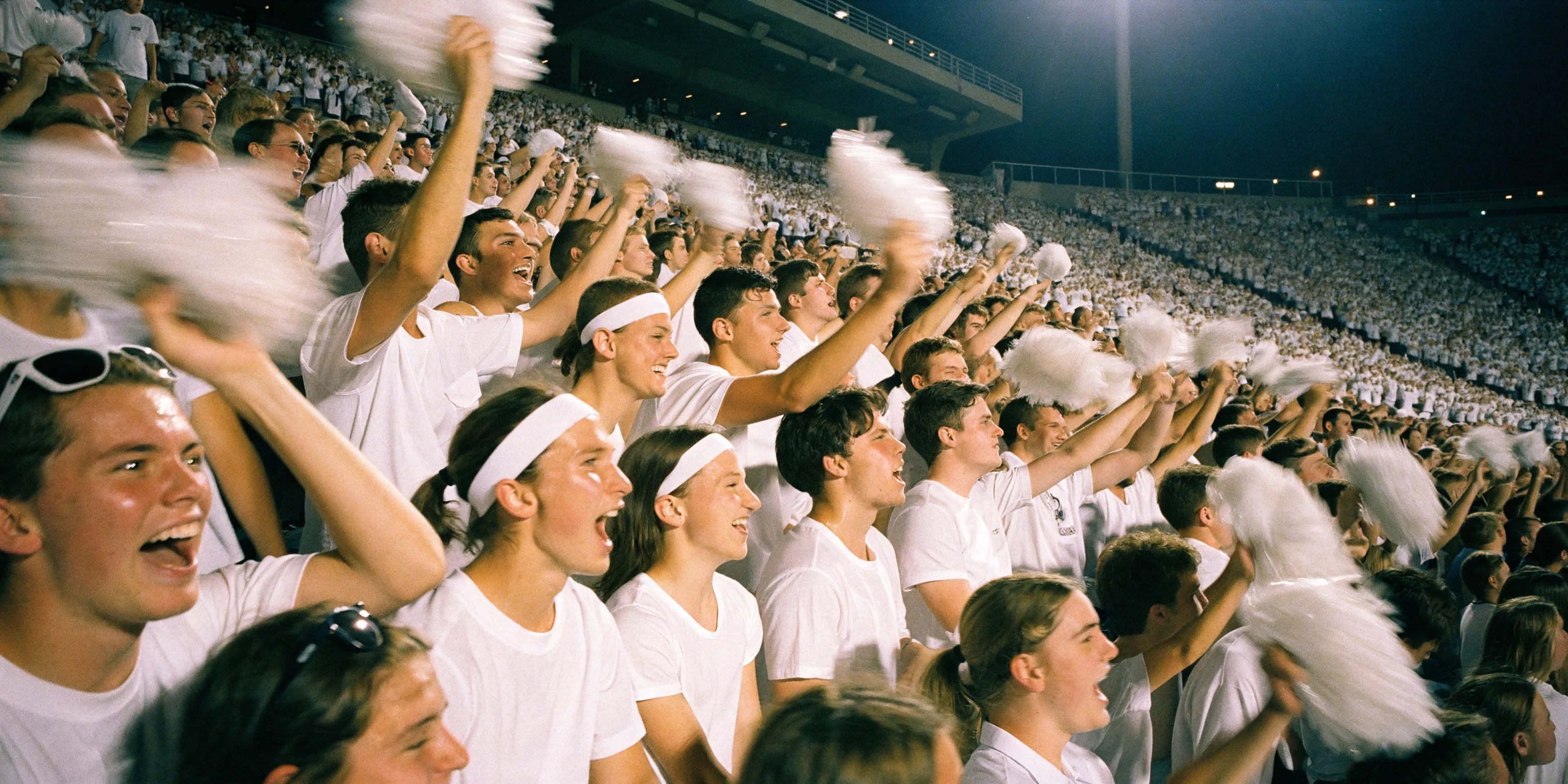
One or two games a year, Penn State asks everyone to wear white, and 100,000+ people comply. Players call it the hardest environment in college football. Tickets for White Out games carry a premium the ordinary schedule can't.
Why it works: scarcity. It's not "every game is special" — that claim dies of exhaustion. It's this one game is special, and you can see whether you were part of it in every photo taken that night.
Steal this: designate one game. Give it a uniform, a name, and a reason to be photographed. A D3 volleyball program can run a blackout night; the mechanics are identical.
3. Krzyzewskiville — belonging with a price of admission
Duke students camp in tents for weeks — sometimes months — for the right to stand in the front rows against North Carolina. The tenting village has rules, community, and a name. Nobody is paid to do this. People organize their semesters around it.
Why it works: effort creates belonging. The harder the ritual, the more the membership means. Duke didn't lower the cost of being a superfan; it raised it, and made the cost itself the community.
Steal this: stop making everything easier. Create a tier of fandom that must be earned — attendance streaks, first-in-line traditions, named student sections with membership that means something.
4. Points for showing up — the loyalty-program era
The least romantic initiative on this list is the one with the clearest numbers. Dozens of athletic departments now run rewards programs where students earn points for attending games and redeem them for merch, priority tickets, and experiences. FanMaker, the longest-tenured vendor in this space, publishes the kind of results everyone else only promises: Coastal Carolina grew student ticket revenue about 30% and Florida State lifted student attendance about 32% with points-driven programs.
Why it works: it converts attendance from a sunk cost into an earning event, and — just as important for the athletic department — it produces a record. Who came, how often, to which sports. That record is what sponsorship conversations and budget meetings actually run on.
Steal this: if you take one initiative from this article, take this one. It's the only one on the list that compounds: every event makes the data more valuable. (We compared the main platform options — including FanMaker and, yes, ourselves — in our fan engagement platforms guide.)
5. NIL-era athlete channels — engagement through people, not logos
Since athletes gained the right to monetize their name, image and likeness in 2021, the smartest programs stopped treating athlete social media as a compliance risk and started treating it as a distribution network. A rotation of athlete takeovers, mic'd-up practices, and athlete-hosted giveaways consistently outperforms the official account posting schedules and scores.
Why it works: young fans follow people. In our breakdown of Gen Z sports fan behavior, the single most important number was this: 31% of Gen Z fans feel more connected to specific athletes than to teams — only 27% connect primarily with a team. NCAA athlete fan engagement isn't a side channel anymore — for the under-25 audience, it is the main channel, and the athletes have every NIL incentive to participate.
Steal this: pick three athletes with genuine social instincts. Give them access, a light approval process, and something to give away. Measure what their posts do against yours.
6. Away-game watch parties — the campus bar as an extension of the stadium
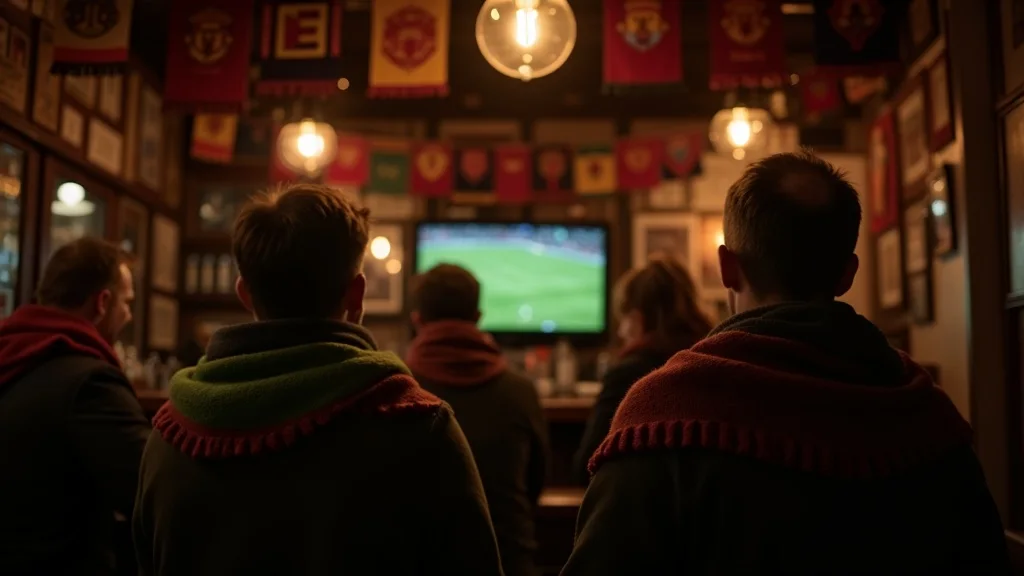
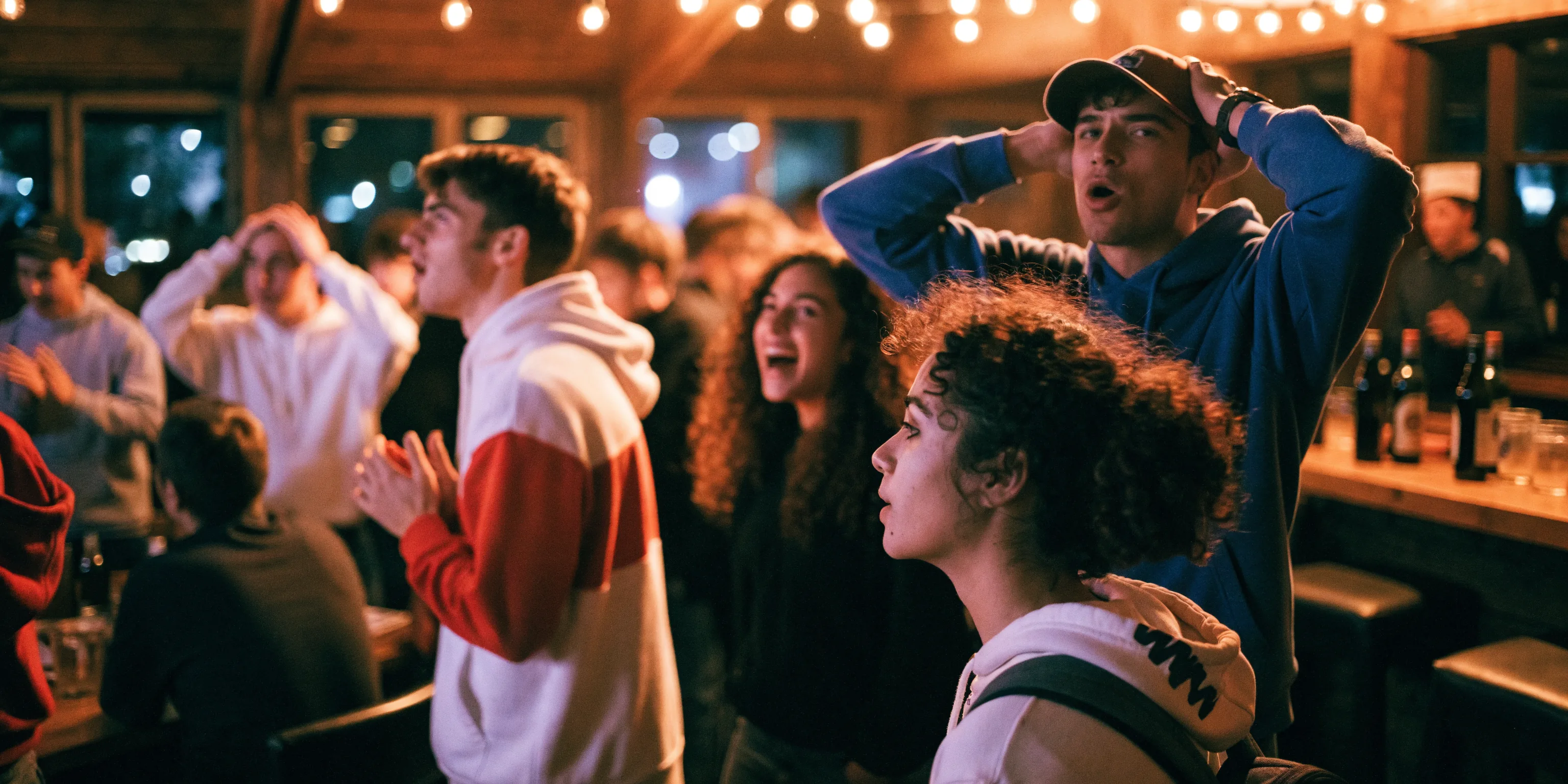
Half your season happens somewhere else. The programs that treat away games as engagement opportunities — official watch parties at campus-town bars, alumni chapter takeovers in other cities — keep their community assembled fifty-two weeks a year instead of six Saturdays.
Why it works: community is a habit, and habits die during away weeks. A designated bar with the game on, a visible student presence, and a reason to check in keeps the habit alive — and the bar owner, whose Saturday revenue depends on your fans, is the most motivated marketing partner you'll ever have.
Steal this: formalize it. Name an official watch-party venue for every away game and give people a reason beyond the broadcast to show up.
What the best initiatives share
Strip the branding away and the successful NCAA fan engagement initiatives repeat four patterns:
- They're measurable. The Wave is counted in cameras; points programs are counted in check-ins. If an initiative can't tell you who participated, it's a vibe, not a program.
- They're rituals, not campaigns. One-off promotions spike and vanish. The initiatives that changed programs happen at the same time, the same way, every time.
- They reward presence specifically. Everything on this list privileges being there over watching. That's the scarce behavior; that's what gets rewarded.
- They run all year. Watch parties, athlete channels, and points programs work in February and July, not just on home Saturdays. Community building in college sports fails most often in the gaps between games.
The playbook without the Power Five budget
Everything above scales down further than most athletic departments assume. A workable college sports fan engagement strategy for a small program looks like this:
- One ritual you can run at every home game (pattern 2),
- one designated game per season with an identity (scarcity),
- one earned tier of superfandom (belonging),
- a points program so all of it produces a record (measurement),
- and a watch-party venue for away weeks (year-round community).
None of that requires staff you don't have. It requires consistency and a way to count participation — which is the part where software genuinely helps, and the part where departments most often overspend on tools built for NFL franchises. We wrote a separate guide on how D2, D3, and NAIA programs prove attendance with limited staff, because the small-program version of this playbook is its own discipline.
Where we fit (briefly, and with the bias disclosed)
This is the part where we tell you what we build, so you can weigh it accordingly. Game Set Engage is the points-and-check-ins layer of the playbook above: fans check in from the app at your games — location-verified, so the record means something — and earn points weighted toward presence: you set the highest value for checking in at the venue, a lower one at a partner watch-party spot, and an optional value for watching from home. They spend those points on rewards you control. Campaigns cover check-ins, predictions, quizzes, surveys, deal codes and auctions — 500+ distinct setups — and the whole thing is free for programs with up to 1,000 fans, which covers most of the departments this article is actually for. If you're comparing options, start with our honest look at FanMaker, the incumbent in college athletics — including what they do better than us.
Quick answers
What is fan engagement in college sports? Anything that turns passive viewers into active, countable participants — attending, checking in, voting, predicting, earning — as opposed to reach metrics like followers or impressions, which count audiences rather than actions.
How do NCAA programs measure fan engagement? The programs that measure well track participation events per fan: game check-ins, campaign entries, reward redemptions, attendance streaks. Social metrics are a satellite signal; the core is a named record of who showed up and did something.
What's the difference between a fan engagement initiative and a promotion? Repetition. A promotion happens once and is forgotten; an initiative happens the same way every time until it becomes an expectation. The Iowa Wave is an initiative. A t-shirt cannon is a promotion.
What's the cheapest way for a small athletic department to start? Pick one ritual and start counting attendance — even manually. The counting matters more than the tooling; upgrade the tooling when the spreadsheet stops scaling.